
Urban Natures: Climate Change Adaptation, Design Agency, and Politics
|
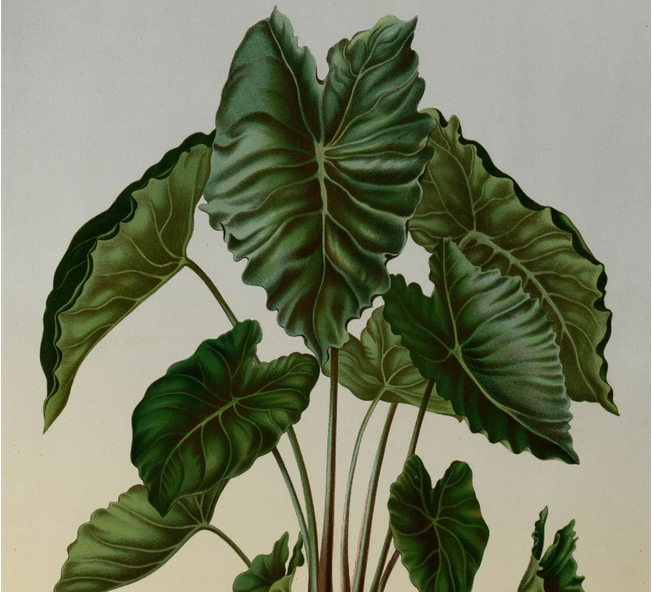
The Druker Design Gallery will host an evening of interdisciplinary conversation to mark the start of the fall semester and the opening of Urban Natures: A Technological and Political History 1600-2030. The exhibition measures how far we have come since the first public gardens were created, and it challenges us to envision the future of our cities in new ways. Following remarks by Dean Sarah Whiting and curator Antoine Picon, Erika Naginski will moderate a panel discussion between Gary R. Hilderbrand, Ali Malkawi, and Mohsen Mostafavi, about three themes in the exhibition: climate change adaptation, the agency of designers, and the role of urban natures in promoting new collective values.
Event Location:
Piper Auditorium
Date & Time:
Sep. 2, 2025 5 – 8 p.m. EDT
Free and open to the public. Register here.
A live stream for this event will be available here at the scheduled start time: Sep 02, 2025 at 5:00 PM EDT. This event is supported by the Center for Green Buildings and Cities and the French Consulate. A reception will follow with generous support by Ron Druker.
Speakers:

Antoine Picon, an engineer, architect, and historian, is the G. Ware Travelstead Professor of the History of Architecture and Technology at Harvard Graduate School of Design. He works on the history of the relations between the built environment and technologies, with a special emphasis on the imaginary and utopian dimensions. He has published extensively on this subject. He is amongst others the author of Les Saint-Simoniens (2002), Digital Culture in Architecture (2010), Ornament: The Politics of Architecture and Subjectivity (2013), Smart Cities: A Spatialised Intelligence (2015), The Materiality of Architecture (2021), and Natures Urbaines: Une Histoire Technique et Sociale, 1600-2030 (2024).

Gary Hilderbrand, FASLA, FAAR, is the Peter Louis Hornbeck Professor in Practice and Chair of the Department of Landscape Architecture, Harvard Graduate School of Design. He is also principal and founder of Reed Hilderbrand Landscape Architects. Hilderbrand is a fellow and resident of the American Academy in Rome. He received the Design Medal from ASLA in 2017. His widely acclaimed publications include The Miller Garden: Icon of Modernism (Spacemaker Press, 1999) and Visible | Invisible: Landscape Works of Reed Hilderbrand (Metropolis Books, 2013).
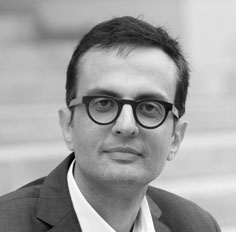
Ali Malkawi is Professor of Architectural Technology, Director of the Doctor of Design Studies Program, and Founding Director of the Harvard Center for Green Buildings and Cities at the Harvard Graduate School of Design. His research is focused in the areas of computational simulation, building performance evaluation, and design decision support. Previously, he taught at the Georgia Institute of Technology, University of Michigan, and University of Pennsylvania, where he was a Professor of Architecture and Chairman of the Graduate Group in Architecture. Malkawi is lead author or co-author of more than 130 scientific papers and co-editor of three books. In 2017, he was honored with the Jordan Star of Science by His Majesty King Abdullah II bin Al-Hussein of Jordan.
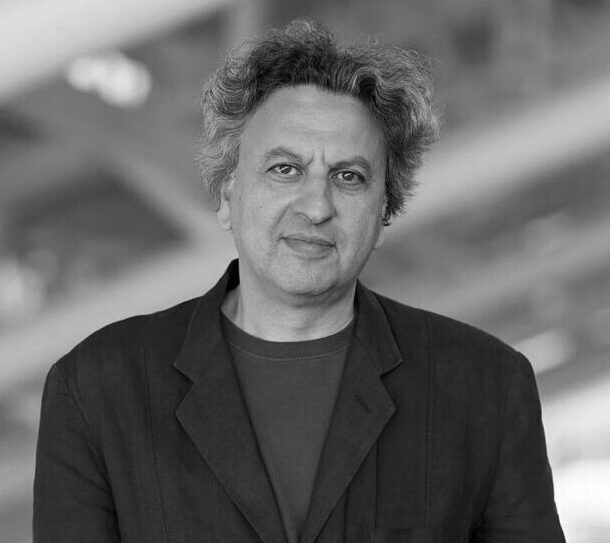
Mohsen Mostafavi is the Alexander and Victoria Wiley Professor of Design and Harvard University Distinguished Service Professor. He served as Dean of the Faculty of Design from 2008-2019. Mostafavi has chaired and participated in the juries of the Mies van der Rohe Prize for Architecture, the Holcim Foundation Awards for Sustainable Construction, and the Royal Institute of British Architects Gold Medal. He also served on the Steering Committee of the Aga Khan awards for architecture. His books include On Weathering: The Life of Buildings in Time (1993); Approximations (2002); Surface Architecture (2002); Structure As Space (2006); Ecological Urbanism (2010); Nicholas Hawksmoor: The London Churches (2015); Architecture and Plurality (2016); Portman’s America & Other Speculations (2017); Ethics of the Urban: The City and the Spaces of the Political (2017); Sharing Tokyo: Artifice and the Social World (2023); Revitalizing Japan: Architecture, Urbanization, and Degrowth (2024); and The Color Black: Antinomies of a Color in Architecture and Art (2024).

Erika Naginski is Professor of Architectural History at the Harvard Graduate School of Design, where she serves as Director of the OHD program in Architecture, Landscape Architecture, and Urban Planning. Her publications, which focus on European architecture (1600-1800), include books and co-edited volumes such as Polemical Objects (2004), Sculpture and Enlightenment (2009), and The Return of Nature (2014). She has received fellowships from the Harvard Society of Fellows, the Radcliffe Institute for Advanced Study, the Deutsches Forum für Kunstgeschichte, the Sterling and Francine Clark Art Institute, and the John Simon Guggenheim Memorial Foundation.